“Students whose failures with printed text have caused them to build negative associations with the medium can become discouraged and lack the confidence that further efforts will yield progress.”
MEYER & ROSE, 2000
Hi classmates – I’m Ivonne,
Various learning and resources, manipulatives and videos could have potentially increased my understanding of fractions in 6th grade. Due to the discouragement I had in not understanding the material, and self-blame for not knowing the language I steered away from fractions as much as possible, and when there was no option my low scores showed my discouragement and lack of engagement. Years later I understood that it was not all on me, there were factors that contributed to discouragement and disengagement, such as proper challenge and support as an ELL student, lack of school resources and various formats to enhance student learning without shaming students for not knowing the material. Even if there were other forms that teachers tried to engage me in I had a language barrier that prevented me from understanding direction and instructions.
Several years ago, I saw a couple of Pinterest post on fractions that I thought would have been ideal for the learning style I needed then with a language barrier. It used Legos to represent wholes and fractions. For a long time, I felt too discourage that I did not seek to learn more, overtime I came around to learning it and I felt more confident because I was no longer a novice English language speaker. Currently I have many ELL students in my preschool class. A lot of encouragement, engagement, repetition, various methods of learning, and support is needed to enhance confidence as a student is learning a subject.
Hi Chelsea, I was impressed too, I did not think other universities outside of the US participated in UDL. So…
Hello Ivonne, I enjoyed your post! I am impressed with all Durham College has to offer on UDL. Which resource…
Hi and thank you! I thought that looking to another country’s practice of UDL might bring in new resources for…
Excellent and I was hopeful you’d find some resources from both of these core readings that might relate to your…
Hi Jeannine, Thank you for your comment. Yes, I did see the document and thought it was a great tool…
Durham College is one of the institutions shown on the website, Post-Secondary Institutions with UDL Initiatives, that currently applies UDL in their setting. Durham College has two campuses, Oshawa Campus and Whitby Campus located in Ontario, Canada (view map here). I found Durham College to have great strengths with the use of Universal Design for Learning (UDL) for their students with a variety of resources and supports. Durham College provides a wide range of UDL resources on their site. It provides UDL overall general information, an overview of the 3 UDL Principles, provides resources (on assistive technology, online dictionary, CAST, etc.), UDL assessment and evaluation, UDL advance and graphic organizers (used by learner), course outline & lesson plans (outcomes, evaluations, & teaching sequence of the course), creating accessible documents using UDL (to ensure all learners are able to read, hear, & see information through MicroSoft documents), and a UDL checklist (provides structure & determine areas in UDL guidelines you currently have in your curriculum).
The information provided on Durham College websites are useful because it provide support & resources to learn and implement within the 3 UDL principles (multiple means of representation, multiple means of engagement, and multiple means of action & expression) to support their college students. Some approaches I found interesting for my UDL systems change plan are the UDL Assessment & Evaluation and Course Outline & Lesson Plans & UDL. I think both would support to provide information and examples for guidelines to implement UDL in assessments and lesson plans with the use of UDL.
Q2. The frameworks that appeared important for my systems change are Dr. Kester’s System Change through enhance collaborations on how to design systems change and increase engagement (Kester, 2020). The document has useful resources, although I cannot reach them directly from documents, the resources descriptions provide information to understand that they are helpful documents and resources for a system change. The other document I found useful was Courtney Kallas, her systems change plan is very insightful, from the language and process development of every phase of her system (Kallas, 2015). It helps to see an additional systems change plan to remind that the systems change of every school/organization vary depending on the need of the school/organization. The last document I found with useful content to support in system change planning is Dr. Smith’s Expanding Career Options with Universal Design for Learning (ECOUDL). While the document is big, with 36 pages of information, the sections I found most helpful are Conceptual Framework to identify interests of the school/organization with the use of UDL guidelines (Harris, Dowd, & Smith, 2011). Furthermore, I found the section Defining UDL and important because it defines why the need of UDL is necessary. The documents and sections named above have helped me to continue expanding and understanding the process and needs of a systems change. I want to reiterate on Dr. Kester’s quote below, as time moves we must remember that we live in a world that always changes and new technology and practices arise to enhance our practices with UDL and must be implemented and revisited as our system change evolve.
“We are also working in an ever-changing landscape of practice.”
“A fair education system does not see all students as identical, and to meet the challenge of learner variability, the school community must share a belief in equity and high expectations for all learners.”
Berquist, 2017, pp. 59
Q1.
I found it reassuring and as a well thoughtout systems change on the time frame that can take anywhere from 3 to 5 years. This ensures that system changes are not rushed and that the process can be valuable in the learning process for all stakeholders. Interestingly, I also found the staff at Dr. Croasdaile’s school were able to have various roles to support school staff and students. While the information felt overwhelming, understanding the process and the time that can take to build realistic goal can lead to successful system change in each phase of the process. It also helped to see that prior to systems change throughout the school, they started a pilot with 6th grade PLC/ELA to help build collaborations and start the process within the school.
The learning targets and statements “I am learning to…” where very helpful to reduce barriers and build learner expertise. The learning targets of learned helplessness, are 1. What Im being asked to do, 2. What my options are for doing it, 3. How to appropriately find information (Croasdaile & Hines, 2020). I found them helpful because it helps to have comprehension of the school’s vision and the relationship to your goals with the use of needed tools, strategies and resources.
Q2.
The strategies I retrieved from this week’s readings are based on Elizabeth Berquist “UDL Implementation in Schools: UDL Moving Exploration to Integration” from Section 2: UDL Implementation in Schools. It continues with establishing a school culture that values 21st century professional learning. They provide a lot of examples from the Halstead Academy, a Title 1 school with the lowest achieving elementary school in their area. The section is focused to building a school culture, and to do so, it’s important to have a shared vision, positive culture, and high expectations through various processes to implement and create a school culture.
Norman, n.d.
A shared vision values professional learning and embraces the framework of Universal Design of Learning (UDL). It also makes it crucial for school leadership team to ensure all staff members begin to notice that traditional design of education cannot meet the needs of all learners. This includes students “within the margins” and learner variability. Importantly, effective collaboration is an essential factor to build a community that values professional learning. It is important to emphasized it is needed to understand and be respectful of the social environment of students that the school serves. To create a shared vision, a strong foundation needs to be built through the schools teachers, because they must agree on large issues. To help understand this, Berquist shared guiding questions from Halstead Academy “Why do we exist?”, “What must our school become to accomplish our purpose?”, “How must we behave to achieve our vision?”, “How will we embark the process?” (Berquist, 2017, pp. 59). The guiding questions can support to build a mission and vision for the school and enhance school culture.
McIntyre, 2019
Creating a positive culture in a school setting is more than staff getting along. In Berquist reading, it is shared that a positive school culture is created“when school staff understands the environment students come from and the challenges they encounter, they can create a teaching and learning culture that meets students where they are” (Berquist, 2017, pp. 60-61). As educators and professionals, when we understand the environment our students come from are better prepared to provide individualized supports and plan for student variability.
“We cannot fix the challenges our students bring to us, but we can fix the way we approach those challenges to ensure that all students learn.” -Novak
Bertquis, 2017, pp. 61
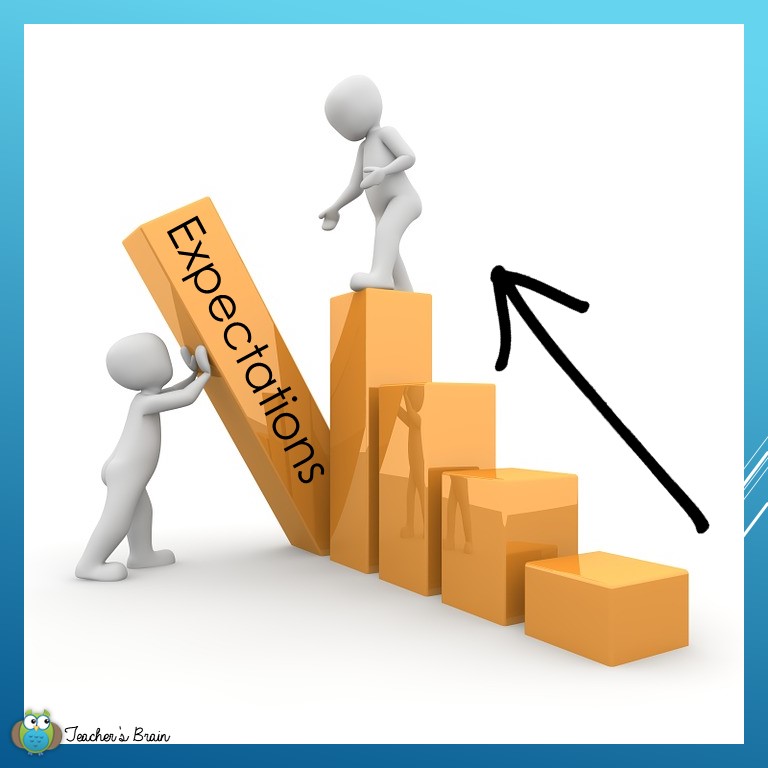
Teacher’s Brain, 2018
The last must have to build a school culture are high expectations. After the schools create a vision and establish positive culture, high expectations must be the norm for the entire school community. High expectations fail when it relies on faculty, staff, students, and parents for school administration to set expectations and hold everyone accountable to meet them (Berquist, 2017). It’s when all stakeholders hold one another accountable to meet high expectations, then the school belongs to all and high expectations are met.
To build a school culture with a shared vision, positive culture and high expectations, there must be an established culture that values professional learning. This helps educators shift from planning to implementation, the administrative team works to find structures that permits teachers to see effective instruction in practice known as instructional rounds. Instructional rounds are inspired by ideas, awareness, rigor and relevance, improving instructional practices and building competencies, and reflective practices. This means, that teachers must experience one another’s teaching methods and strategies through various supports. This allows for the instructional process to evolve over time, in Halstead Academy, teachers started to identify focus areas, attributes of a 21st century classroom that focuses on collaboration, creativity, communication, and critical thinking in their instructional rounds. The instructional rounds are not methods of evaluation, judgement, and critiques. Within the professional learning, educators begin to develop distinctive and common language through the value of resources and enhance strong professional relationships.
Clip Art Key, n.d.
You might be asking yourself, how does a school have professional learning to enhance school culture? This happens over time through rigorous whole group and small group supports for professional learning. Whole group are through the use of online resources with UDL applications, multiple means of representation. In Halstead Academy, this was provided through online resources to be accessible at the teachers time. Ensuring the application of UDL through multiple means of representation, action and expression for learning teachers allows the delivery of instruction to meet the needs of educators. Small group allows for grade level meetings that allows for problem seeking solutions, data analysis, professional development, application and responsive planning. Sessions promote community and collaboration among team members allows mastery feedback from administration that are relative to the school’s goals.
Furthermore, there is vast supports for individualized professional development. This gives teachers to acquire resources from other teachers and administration. Then, teachers identify their own goal, develop a plan to meet the goal and identify how this goal will impact the student achievement. This can be supported through various forms of professional development:
Book Study – Teachers are grouped by common goals, and facilitate a stud book. The literature aligns to desired professional outcome. The experience culminates in a book review the group writes and presents to the rest of the faculty.
Coaching Sessions – Coach provides support by modeling, co-teaching, coaching, and providing feedback through the lens of the teachers goal.
Presentation – Share ideas/information this allows to experience of presenting to share their next practices with peers during whole group.
Article or Tutorial – Share new ideas as they pertain to their desired goal can do it in a form of an article or web tutorial, with the use of screencast tools.
Learning Walk – Teachers observe several classes looking for trends, effective practices, and student engagement. This peaks in a reflective, non evaluative conversation with the instructional coach.
Lesson Study – Form groups based on similar goals or across grade levels. Together they plan lessons with the use of best practices. One member implements while the rest of the group observes. Then, teachers reflect on the lesson using formative assessments and observation tools connected to their goals. The process repeats by implementing changes they deemed needed to improve lesson.
Peer Observation – Observe a peer in their strength area one wishes to improve. Such as teachers working to identify best practices for inclusive classrooms.
Conference/Workshop/Webinar/Online Course – Allows for teachers to engage in materials aligned with their own goal, on their own time, & reflect on or share new learnings with others
“We cannot prevent all of the challenges students will face, but we can alleviate them by designing a learning that leaves no room for failure…[T]o do this, we need to be surrounded by people who have the same belief.” -Novak
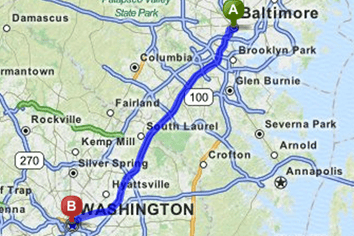
Q1. The “Table of 4 Districts” is a story based on four school districts in a journey in the implementation process of Universal Design of Learning (UDL). The districts included schools in Baltimore County Public Schools in Maryland, Bartholomew Consolidated School Corporation in Indiana, Cecil County Public Schools in Maryland, and Chelmsford Public Schools in Massachusetts. I chose to review Baltimore County Public Schools (BCPS), it’s a county in Maryland, 45 minutes from the nations capital, Washington, DC.
The BCPS demographics include 174 schools, programs, and centers. There are 17,000 employees that includes 8,850 teachers and 105,315 students as of 2011, with 58% of students being minority and 3.8% English language learners. BCPS is considered the 26th largest school system in the U.S. At BCPS, UDL was introduced through the Special Education department. Unfortunately, UDL was not embraced fully by general classroom teachers because they had the misconception and believed to focus on students in special education.
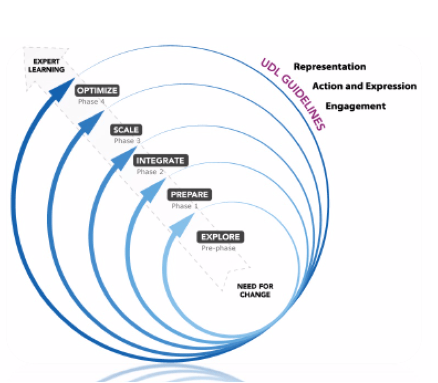
BCPS initiated the Explore Phase of UDL through UDL symposiums in curriculum & instruction for staff, teacher & instructional leaders participated in UDL book studies, curriculum writers received UDL professional development, school administration (including those in Aspiritn Leaders Program-requirement for entering administrative pool at BCPS) participated in UDL awareness activities & principals attended in ULD workshops.
BCPS had a new superintended and with their goal to make a change in their district, former assistant Superintendent shared that Baltimore county had to change their curriculum to align with Common Core State Standards (CCSS) and implement a 21st century curriculum to meet the needs of all their learners. Two middle school principals with UDL knowledge were selected to participate in the UDL Implementation Project.
A challenge to implement UDL involved the introduction of a new initiative. For a few years, BCPS remained stagnant at phase one (prepare) of UDL, which was PD/training of staff, but had a difficulty in the implementation of UDL. To surpass those barriers, teachers took a survey that expressed share lesson plans and lessons learned was considered “most valuable” and with additional advice (e.g. UDL planning & purposeful sharing, provide enough time for UDL implementation initiative to grow, research best practices for establishing & support professional learning communities.) Over the years, BCPS is posed to continue the success of UDL through integration and scale phases of UDL Implementation (National Center on UDL).
Q2. Some ideas about beginning to explore UDL within a school or agency lies in the leadership team, adaptation of new models, new methods of teacher evaluations, & increased emphasis on all student results despite the increased student variability & decreased funding. For this system to work three core competencies of high performing school systems are needed 1. Understand where they are & where they’re going, 2. Develop a theory of action to support planning & strategy development, 3. Find ways to sustain improvement. Other factors do support success that include a strong culture within teachers, students, families, and communities to be part of the system and develop meaningful goals that align with the same vision (Novak & Rodriguez, 2016).
D.C. Public Schools (DCPS) launched Cornerstones initiative in the school year 2015-2016 to implemented UDL framework through across K-12 grades. It provides experiences for students to engage throughout the units of study. It is provided through various subjects including ELA, math, science, PE, world languages, art, social studies amongst the grade level content areas. Cornerstones vision is to bring education equity to our public schools. In year 2 (SY 2016-2017), UDL was incorporated to support students (DCPS Cornerstones, n.d.). In addition, I have also noticed that the CES classrooms in my schools have been guided to support students in special education through the principles of UDL. I have yet to see UDL implementation across homerooms in elementary school and early childhood. Further and continuous training is needed to support in my school to support all students.
The leadership team at my current school are amazing, I think they would be open to learning about UDL and acquiring training to obtain needed supports from the district to implement across general education homeroom classrooms. Obtaining the support from the special education team will support to bring their attention as we have classrooms that support inclusion across all grade levels at our school. Through this class I have learned about UDL and I see how its implemented in my classroom. Now with more knowledge and experience, I am able to actually plan within the UDL framework and guidelines to support learner variability for all of my students. Have you also noticed UDL implementation among special education classrooms in your school but not in general education homeroom classrooms?
Q1. In UDL Theory and Practice – What are the key points you took away from the examples? What changes would you make in how learning was assessed in this situations?
To best assess learning, understanding the means behind assessment of formative (during instruction to make adjustments in teaching) and in summative (measures educational performances once instruction is completed) which are both process to gather information on a student’s performance. When the assessments are viewed separate it can create barriers to teachers and students. One of the key points that I took away from the UDL Theory and Practice assessment section is the conjunction of assessments designed to enhance teaching and learning (Meyer, Rose, & Gordon, 2014). Often, educators assess students with pre and post assessments to have an idea of where their students are prior to a lesson and after a lesson. The ability to assess by design is part of UDL, which. This means that the UDL model with assessments is based on the curriculum performance, and not student performance.
Another key point is the formal structure of formative assessment of progress monitoring. This supports as regular check ins on how the student is doing, but also how is the educator doing. Observable measure in students’ performance and instruction can lead to well performances at the end of a unit or summative assessments. Though, providing supports to students such as scaffolding and mentorships helps students learn to evaluate their effort and persistence over time, which evolves to acquire a sense of autonomy of their learning (Meyer, Rose, & Gordon, 2014).
It is a good idea to revisit assessments from a UDL perspective, as assessments should be:
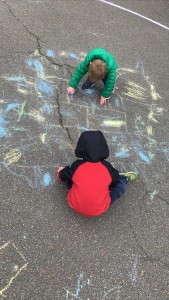
Ask students “What are you doing?” Students: “We’re making a grocery list”
– Ongoing and focused on learners progress: Provides students’ comprehension and learning evolution. Offers opportunities into efficacy of instruction for adjustments and keep students on track of instructional goals. Helpful tools to support ongoing & focused on learners progress are: i. Observe and talk to students in a direct way ii. Ask students what they know and what they are doing iii. Check for students understanding, are learning needed skills, and are engaged in the work. iv. Student portfolios, project-based learning, and self-assessment journals (ongoing actionable information about students’ learning.)
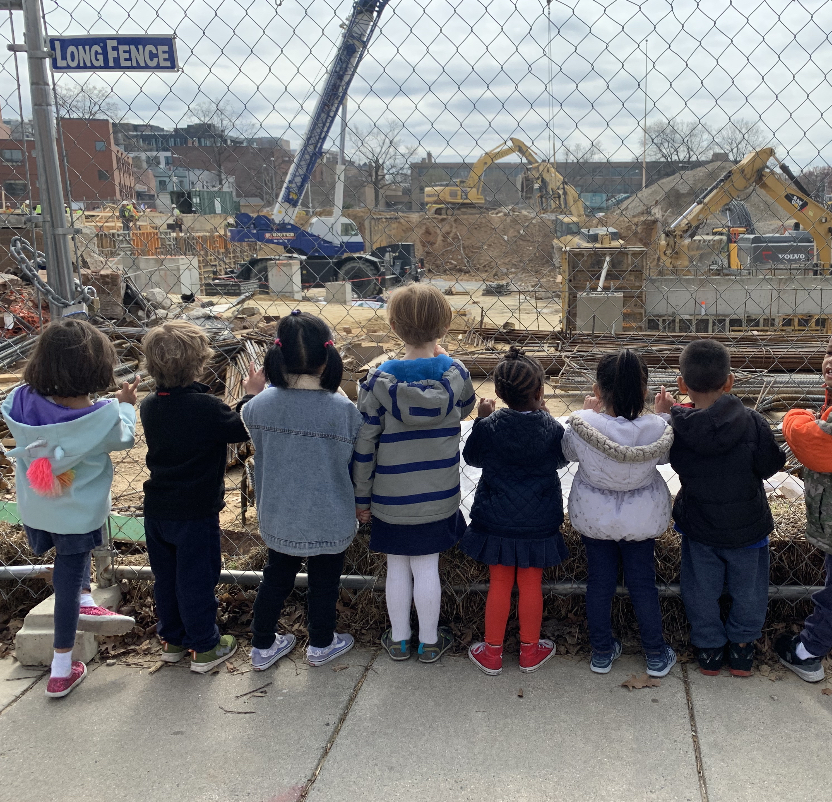
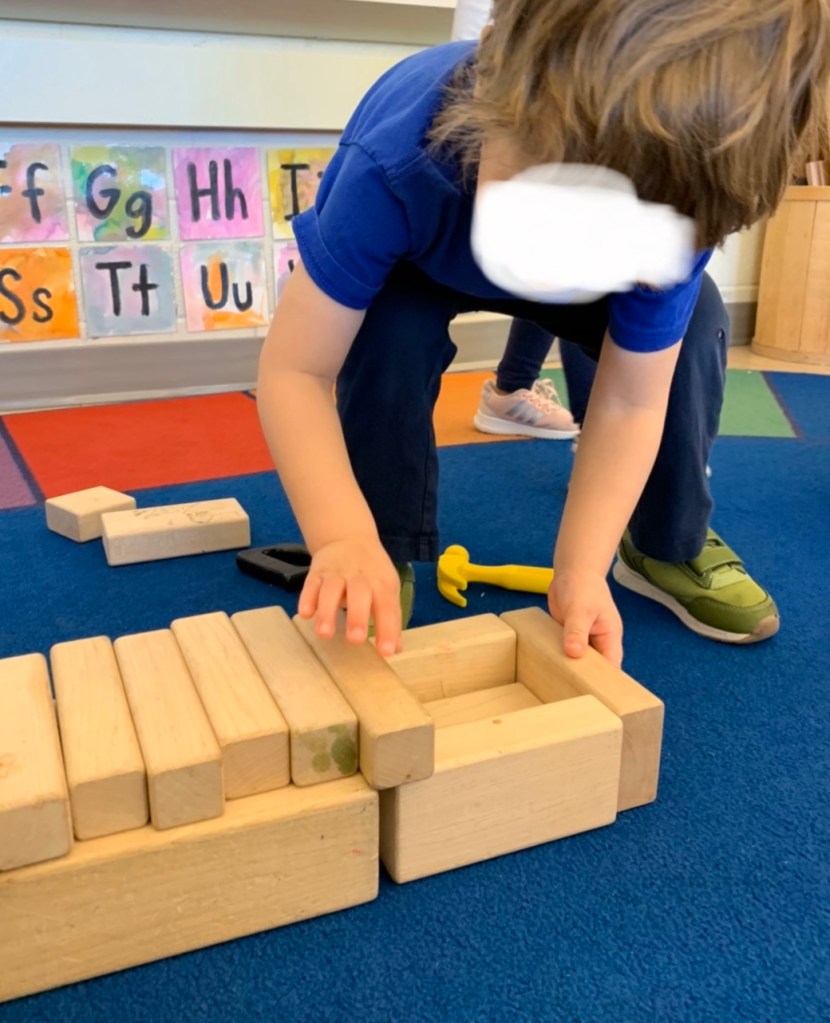
OBSERVABLE:Our class at a construction site for our building study. My students used the learning environment to engage with peers and expand activities in the classroom.
– Measures product and process: Examining interactions between students and the learning environment over time, assess performance but also what underlies performance and cues, strategies, motivation, interaction that effects different aspect of curriculum. Identifying engaging activities, changes in content presentation can support, and feedback and supports to build skills.
–It is flexible: Considering learner variation in affective, recognition, and strategic networks, we must focus on how assessments need to be adjusted to meet learner variability. This is important to obtain accurate data about what students understand and are able to do. Assessments should provide various opportunities in varied media for skills and self-expression to be demonstrated by learners. Digital tools help learner expression in various formats such as open responses, graphic organizers, drawings, events, information.
It is demonstrated in recent research “strong evidence that creating assessments that are flexible enough to allow for customization increases their relevance for students, heightens student engagement, and can improve student performance” furthermore, it accurately represent what learners know and are able to do (Meyer, Rose, & Gordon, 2014, pp. 74).
What are some ways you have or want to provide flexible assessments to your students?
–It is construct relevant Assessments are critical as part of the curriculum and instruction based to support all learners. Therefore, an assessment must be clear and on target t to measure construct affect, concept knowledge, or skill that it is intended to measure. Components to support representation of construct assessment must be in place for accurate measures such as:
A student interacts with a stimulus, problem, question, or task
The assessment requires action related to the construct
Student yields a response that is observable and measurable
Scorer views response and creates a quantitative score
The score is an indicator of student knowledge, understanding, or mastery of the construct measured (Meyer, Rose, Gordon, 2014)
When a barrier arrises in any component the accuracy of the measure will fail. This means that “if an assessment construct is not clearly defined and construct-irrelevant factors are left unsupported, assessments cannot provide an accurate representation of all students’ affect, skills, and comprehension” (Meyer, Rose, Gordon, 2014, pp. 75).
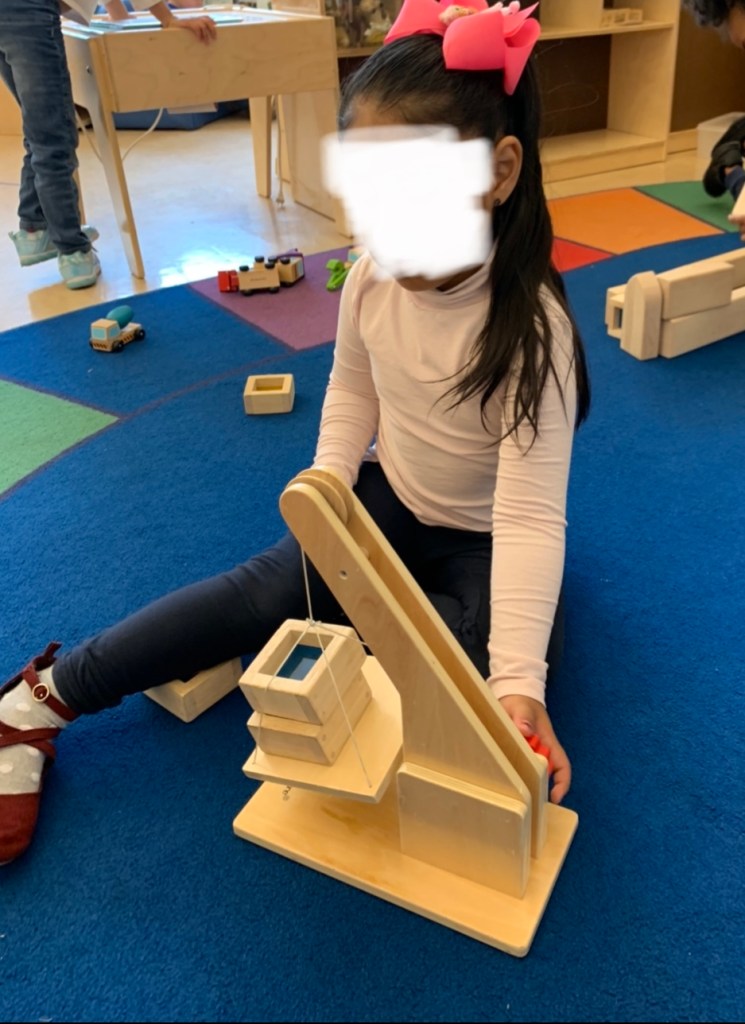
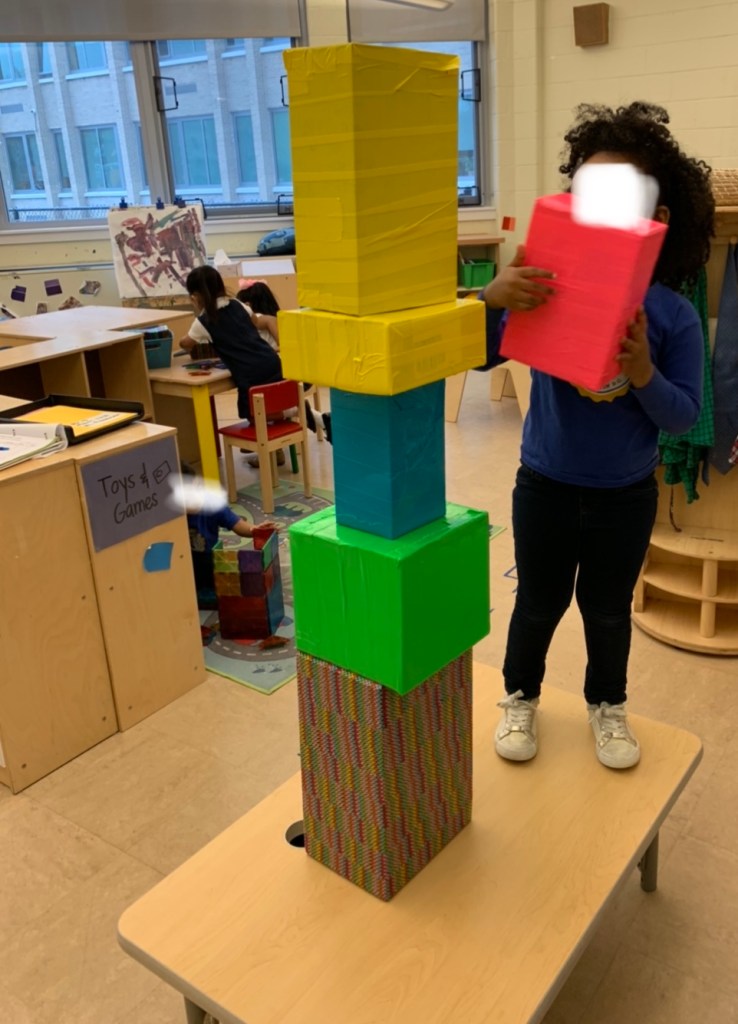
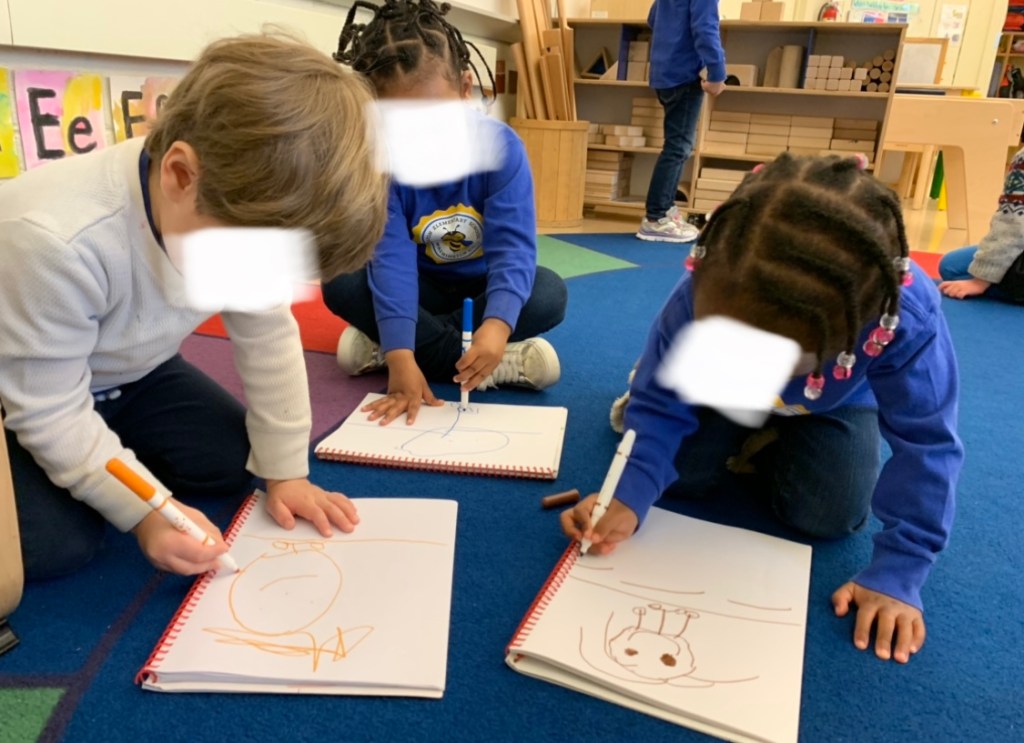
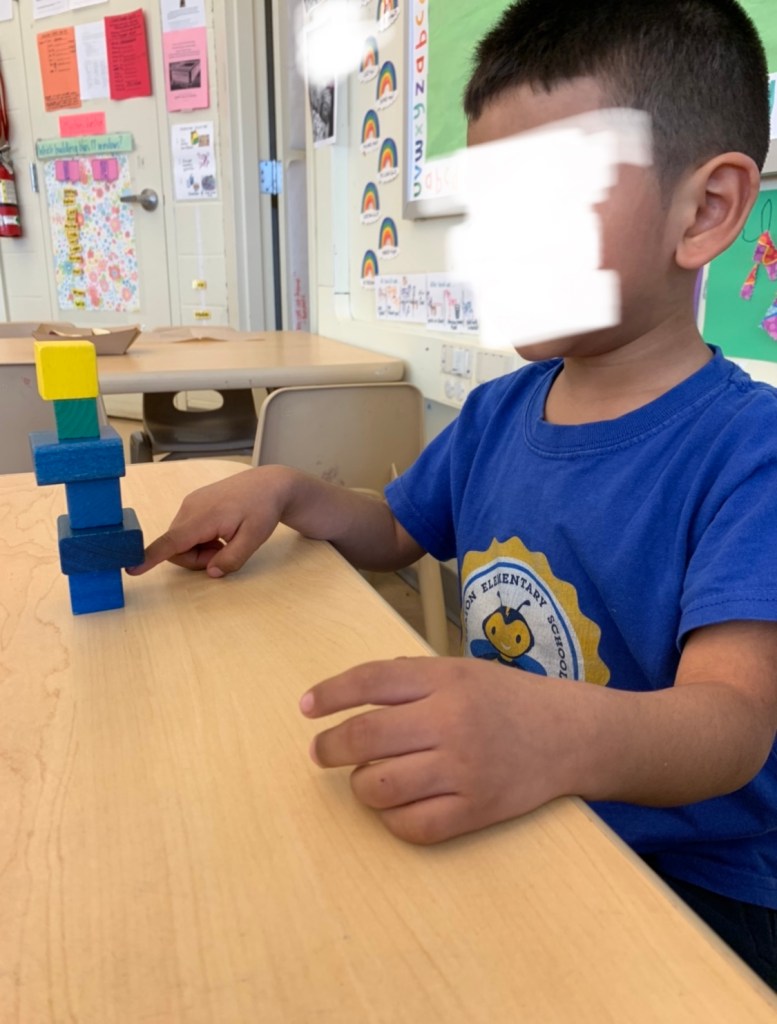
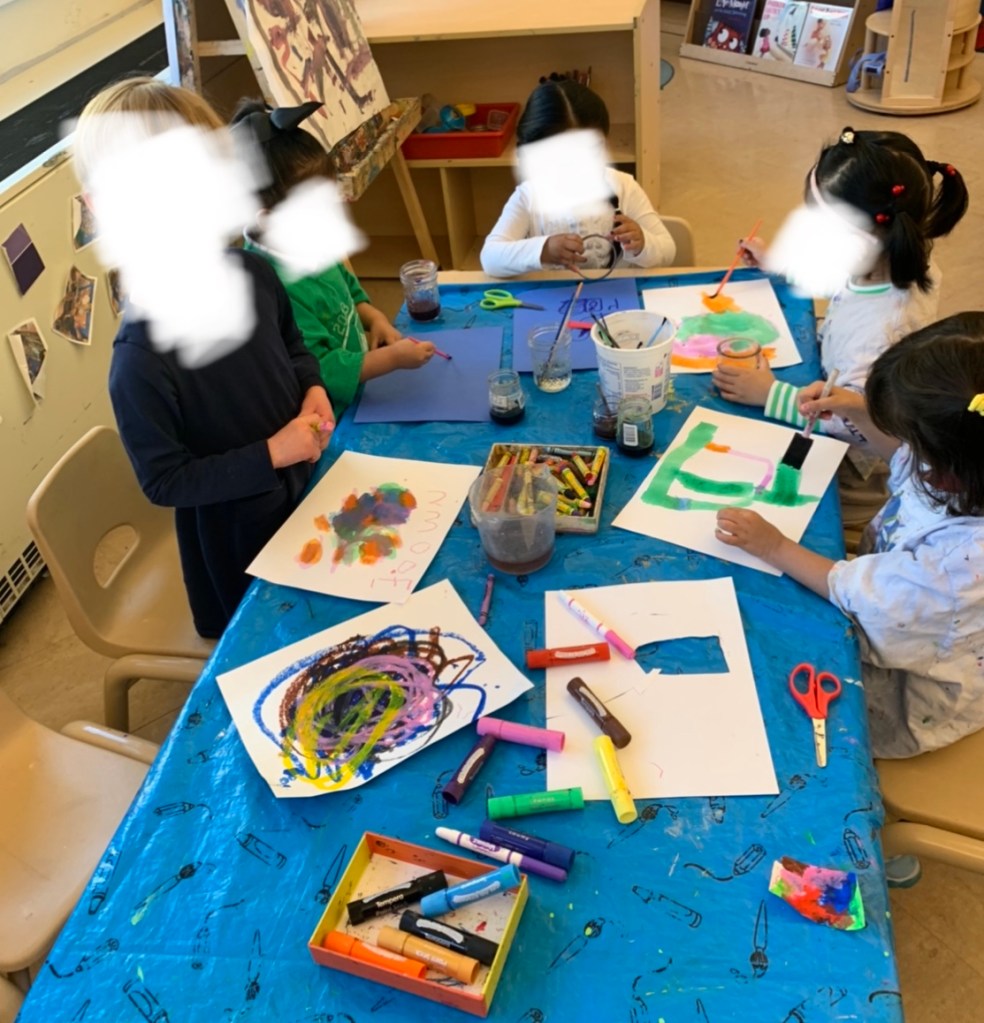
– Actively inform and involve learner Figuring out ways to teach effectively includes openly sharing feedback to enable teachers and students to evaluate their work. The ongoing support of progress monitoring provides various opportunities to demonstrate their skills and understanding. In the picture slide show below, you will find my preschoolers engaging in multiple ways (drawing/writing, building with various size/types of blocks, and art) to express their knowledge on our building unit. Their work is saved as progress monitoring and evaluate their knowledge over time. This supports evaluating their own work to support their abilities and expectations. Their work is saved in their portfolios and used as ongoing progress monitoring.
Q2. Based on selected article– What were important assessment messages? Assessment approaches focus (formative or summative) How to incorporate suggestions into the design of my own lesson?
The article I selected is “Addressing the Variability of Learners in Common Core-Aligned Assessments: Policies, Practices, and Universal Design for Learning” by CAST. The important assessment messages this article shares revolve on the Common Core PARRC testing and the five identified factors that should be addressed from the outset by PARCC and SBCA when creating assessments. The important messages are in the 5 critical factors of common core PARCC assessment: (1) Prioritize formative assessments as part of instruction, (2) Capitalize on the use of technology-based assessments, (3) Consideration of assessment impact on classroom instruction, (4) Potential negative effects of computer-adaptive testing on subgroups, (5) Ensure accuracy, reliability, and precision with constructs for all students.
Prioritize formative assessments as part of instruction – Formative assessment allows educators to evaluate knowledge and skills ongoing and set preparation for college and career ready standards. In contrast to summative assessments, it provides a score based on that performance at the end of insturction. Additionally, well designed formative assessments benefits teachers, students, parents and administrators.The supports of formative assessemnts brings forward information about performance during instructional modifications, changes, and alterations in instruction and goals. This also brings the importance of assessment data collection, and ability better learning and instructional practices for all students.
Capitalize on the use of technology-based assessments – Technology based assessments have the capacity and flexibility to facilitate access to all learners, that include students with sensory, physical, and learning disabilities. The use of assistive technology during assessments should ensure it does not impede the availablity of supports needed for students; with technical standards need to be established. Allowing only specific AT devices where construct validity is not violated, limitations of AT should not be implemented because it denies students the opportunity to use technology and does not support in preparation for college and career readiness.
Consideration of assessment impact on classroom instruction – There are best practices that support and suggests assessment accommodations to align with those accommodations received in instruction in the classroom. There is also restrictions on assessment policies and procedures, which instruction practices can limit and impact decision-making of the IEP team. Limitation of assessment practices can create conflict between the use of technology in instruction and the availability on assessments, which prevents schools from being innovative in multimedia tools to support all learners. However, access is not the only presented barrier, but also the teaching and practice use prior to the use during assessments should be considered. Creating those restrictions, that are received in the classroom, violates their rights under the IDEA and Section 504 as it impacts assessment on instruction.
Potential negative effects of computer-adaptive testing on subgroups – Computer-adaptive testing (CAT) approaches reported efficient and accurate with responses with multiple choice and short answer limitations. In mind of sub-populations, other students with different needs and skill sets may face barriers and fail basic items without having an opportunity to exhibit skills on higher level tasks.
Ensure accuracy, reliability, and precision with constructs for all students – Assessments including the Common Core should align with precision in respect to the identification of intend constructs of assessment items. Without alignment and precision, the outcomes will be irrelevant for some students and will result in scores to be invalid, and in violation of students rights under IDEA and Section 504 (CAST, 2013).
The article emphasizes on the need for students to have access to their accommodations in assessments (formative and summative) as they have in classroom instruction. For example, one of my students has a vision impairment on the left side. Therefore, we work on presenting information to his right side, where he has vision and ability to access and view information presented. If this accommodation is not taken into account during assessment (formative or summative), there is a violation of the students’ rights under the IDEA and Section 504. This allows for teachers to put in practice the students accommodations, and to practice during instruction. The same accommodations for classroom instruction can be practiced so that student has access to the same accommodations during testing. This will provide students to perform to the best of their abilities. In addition, the practice of technology in the classroom is highly important. Another example I have is of my son, Adrian. He is currently learning to use the calculator as it is one of the accommodations he will have access during testing. He can have the accommodation of a calculator, but if he is not taught and does not have practice with the calculator, the accommodation becomes inaccessible. This is why accommodation and access go hand in hand, and with the supports of classroom practice, students will be able to access their accommodations.
Q3. Examplesof observable assessment measures based on Dr. Jenna Gravel presentation –
Gravel, 2020
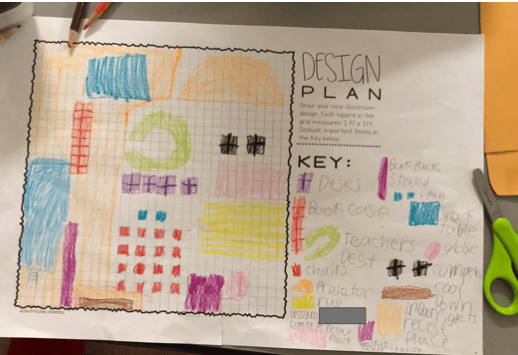
Some examples of assessment measures I observed were the scale drawings of the student’s ideal classrooms in the 1st grade examples. Students were able to produce their classrooms with important aspects related to their needs (i.e. “stop in think” space, bookshelves, carpet space). The illustration students developed were within the ratio of one square to equal to 1 foot by 1 foot (Gravel, 2020). The students worked on drawing plans or the dot markings activity also showed effective assessment that provides variation and recognition (Meyer, Rose, & Gordon, 2014). The students work can be taken as a means for individual support. For example, the student that drew the bookshelf, indicates in the drawing that books are important to this student. Another student drew the “stop in think” that promotes a safe classroom to reflect on one’s choices prior to a behavior. Another example showed a student that drew in place bicycles for movements in the classroom. The students work demonstrates partial learning styles, materials that are important, and kinesthetic needs of their body.
References: CAST (2013). Addressing the variability of learners in Common Core-aligned assessments: Policies, practices, and universal design for learning. Policy Statement. Wakefield, MA: Author.
Gravel, J. (2020). Exploring UDL at the Classroom Level [Google Slides]. George Washington University Universal Design for Learning: Blackboard http://blackboard.gwu.edu
Meyer, A., Rose, Gordon, (2014). Universal Design for Learning: Theory and Practice. Wakefield, MA: CAST Professional Publishing.
“Each and every learner has unique strengths, skills, interests, desires, and readiness levels.”
RALABATE, 2016
Currently I teach preschool students and I have also taught Kindergarten in previous years. Our school is known for the diversity of our students. My class has a group of six ELL students that speak Spanish (3), Amharic (1), Arabic (1), and Mandarin/Chinese (1); I also have one student with an IEP that receives supports in Speech, Occupational, Adaptive PE, Vision & Hearing Support, and Specialized Instruction. In chapter 1 of Your UDL Lesson Planner, Patti Ralabate shares that now classes include more students with disabilities and they are not the same as they were in former years (Ralabate, 2016). This is true for our school, we have students that participate in inclusion that are in the Communication and Education Support (CES) classrooms, as well as students from Head Start that have an IEP.
To reach my diverse group of students, planning to support them I must include multiple means of support to lessons. Prior to this class, I did not have a full understanding of UDL, and did not think I was implementing it in my class. Now, having more knowledge and better understanding of UDL I can share there are many aspects of my teaching strategies that support the three guidelines of UDL that encompass multiple means of engagement, multiple means of representation, and multiple means of action & expression. “UDL is a framework to help remove barriers in the learning environment” (Ralabate, 2016, p. 4).
The current curriculum used district wide for preschool (PK3 & PK4) is Creative Curriculum (CC) by Teaching Strategies. It provides play-based experiences and implementation of language, counting, developing positive relationships, problem solving skills are provided (Teaching Strategies, n.d.) in the learning of five studies in the school year. Our preschool has studies in Trees, Recycling, Clothes, Balls, and Building. Lesson plans are not provided, but CC provides day by day guidance of your investigation. For example, my class’s study we are currently investigating is Clothes, CC books provide the following supports:
Interest Areas – Toys or items to put in centers i.e. buttons, yarn, tape, measuring tools.
Question of the Day – A question to engage students in the morning, typically upon arrival i.e. “How many buttons do you have on your clothes?”
Large Group – Activities in large group, such as exploring different sized of clothes i.e. showing different clothes shorts, pants, long and short sleeve shirts.
Read Aloud – Provides a book to read. That relates to the study such as “Corduroy,” “Goldilocks and the Three Bears,” “Button, Button, Who’s got the Button.” The books provide language and support in types of clothing, sizes, and what is on our clothes such as buttons.
Small Group – Activities can include graphing our clothes that have zippers, buttons, snaps, Velcro, and laces.
Mighty Minutes – Are 1-3 minute activities that support student involvement in hand movement or songs. (Teaching Strategies, n.d.)
Chapter 1 had a reflective question that resonated with me — Questions 2: “What would you have to change in order to apply UDL to your lesson planning.”
This reflective question resonated with me because it helped me think of all my learners’ needs to provide “flexible approaches that can be customized and adjusted to scaffold and support learning” (Ralabate, 2016, p. 5) and learner variability in the way that they are “unique, strengths, skills, interests, desires, and readiness to learn” (Ralabate, 2016, p. 5). As UDL supports variability of all learners I started to think of the learning goals implemented in my curriculum and day to day lessons. One of the great things about Creative Curriculum is that it aligns with the GOLD Assessment used district wide for Progress Report and it’s developed by Teaching Strategies as well. This supports in lesson planning that aligns with the 38 assessment objectives in Social Emotional, Physical, Language, Cognitive, Literacy, Math, Sciences and Technology, Social Studies, The Arts, and English Language Acquisition (Teaching Strategies, n.d). To have CC align with the objectives enhances planning to be organic with learning objectives.
Chapter 2 blew me away, one of the reflections early on the chapter is “In what ways do you currently hold all learners to high expectation and still address their different strengths and challenges.” This is extremely difficult to reflect on, and I started to think, do I hold all learners to high expectations or do I make exceptions based on their readiness levels? As educators we may be guilty that our expectations vary depending on the student. For example, my expectation for a student that demonstrates strong vocabulary will be to express or show in detail the different types of clothes we wear. For a student learning English, my expectation changes as their vocabulary is limited and I expect them to express or show with minimal details on types of clothes. For a student with an attention span of 2-5 minutes, my expectation will also vary as the student might be interested in animals instead of clothes.
Nonetheless, I have expectations for my students, it is clear that I must have a clear purpose for the lesson, and not an activity. For example, it must be a clearly defined goal that leads the lesson and not an activity, that is, I should change the activity of expressing or showing what clothes my students know, but the purpose of the lesson is to differentiate clothes we wear in different seasons. This objective includes a flexible verb (differentiate) that allows students to engage and link their perceptions, show skills, and acquire new knowledge. I will be able to implement SMART learning goals in my planning to enhance my student’s learning. As UDL is based on neuroscience research, we cannot leave emotion out. In this week’s meeting, our guest speaker Allison Posey shared that emotions dominate perceptions, and emotions link to what we perceive as a learner. When a learning goal is too difficult our students emotion can make our students feel defeated. When the UDL guidelines are implemented we can plan for learner variability and set objectives that include variety to enhance learning.
References:
Ralabate, P. K. (2016). Your UDL Lesson Planner: The Step-by-Step Guide for Teaching All Learners.Paul H. Brookes Publishing Co.
“We can see the variability. And because we can see it, we design for it. And when we design for it, we end up being able to recognize talent that would have otherwise gone unnoticed.”
Being an expert learner to me means to do a task very well and with minimal errors. After going over this week’s numerous resources it taught me that being an expert learner is an ongoing process of practice, adjustment, and refinement. We must have purpose and motivation of why we’re learning, we must have resources and knowledge, and we must be strategic and goal oriented. There are various ways to show learner variation, such as the Rubik’s Cube example from Todd Rose’s video on Variability Matters. I found many variations of the Rubi’s cube online that supports different participants. Prior to this week, I thought you must be gifted to complete a Rubik’s Cube, and a genius to compete and win like Feliks Zemdegs (Meyer, Rose, & Gordon, 2014). It takes the process of expertise of practice, adjustment, and refinement to be an expert learner.
In my classroom of preschool students, we focus on literacy skills throughout the day and through play plan. My students are provided with various ways of representation with the use of physical items, visual and language support. My students also engage in literacy through our morning message of the day; I come up with a message related to our current study and draw a picture and write a message. On the picture on the presentation, students were able to engage to draw parts of the picture and write words and letters they know, such as “to,” and “p.”
To enhance their literacy skills, my students play plan in their individual journals. Similar to that of the morning message, play planning is based on their zone of proximal development (ZPD), students are able to draw, say what they will do in centers, write one word for each line, and use initial sounds to write their message. I support where scaffolding is needed, and that varies on every student. Part of learning to play plan is letter recognition and fine motor skills. To support various learners, I have used sand to practice writing letters and support motor skills and hand-to-eye coordination. I have also used tiles for letter recognition in their names. These are a few ways I support learner variability to engage my students in learning. When students are engaged in their environment it intrigues their affective, recognition, and strategic primary networks in their brain (Meyer, Rose, & Gordon, 2014). This allows my students to engage in activities, perceive information and translate knowledge to create new schemas; and supports to organize and engage through actions in their environment, such as recognizing the letter “s” at the stop sign.
I hope you enjoy the presentation, I’m new to Prezi, so it was a challenge but was satisfied with the process, the more I edited I navigated the site with ease; using the expert learner strategies, I conquered (semi) prezi. Feel free to reach out with questions and cannot wait to read your comments!
“Consider the range of user abilities at the design stage of the curriculum and plan for accommodations…”
CASE, 2003
As part of planning, think of board books, hardcovers or paperback books to support various user abilities.
As you walk into a building the doors open via a sensor or the ADA push button and the doors open. Or you are waiting at the crosswalk reading and you hear the voice-over crosswalk recording to “walk.” There are many examples we use daily that derived from the principles of Universal Design (UD). I have known accessibility has been put in place for people that need support, but after going over the 7 principals of UD (The Center of Universal Design, 1997) I began to notice I rely on it often. For example, I use the ADA push button, I prefer to use ATM’s & screens with visual cues, the friendly use of instruction manuals for furniture I’ve built, audio cues at sidewalks, the undo feature on my phone, automated soap dispenser in restrooms, and I certainly love spacious aisles at grocery stores. I have personally used many of them to ease my daily life, but I have unintentionally relied on them. Usually I’m focused on my son and prompting him to be safe as we wait for the light to change. I do not always look at the crosswalk light and I rely on the recording to “walk” and redirect my son to cross the street.
Our students are like fingerprints; no one student is the same, and there is learner variability within our students. They have different personalities, ways to communicate, learning styles and backgrounds; it is essential we keep in mind each students’ strengths and challenges to support in their success. Similarly, as a learner myself I work on yearly instructional modules as part of work to enhance knowledge, tools, information, and updated regulations to better support my students
Some examples on the online instructional modules I see are interactive examples for engagement, ability to go back or forward in the modules to self-regulate, multiple means of learning with text, visual images, videos, and interactive examples. In addition, the modules provide representation through key word definitions, illustrations in visual images and videos that range in length with closed caption subtitles, and guidance to the structure of module of what will be learned and objectives of modules. Furthermore, the modules provide action & expression through quizzes as a means of progress monitoring, multiple media usage through videos, interactive examples and videos, images that support critical thinking, and text recognition, typically the modules are read aloud.
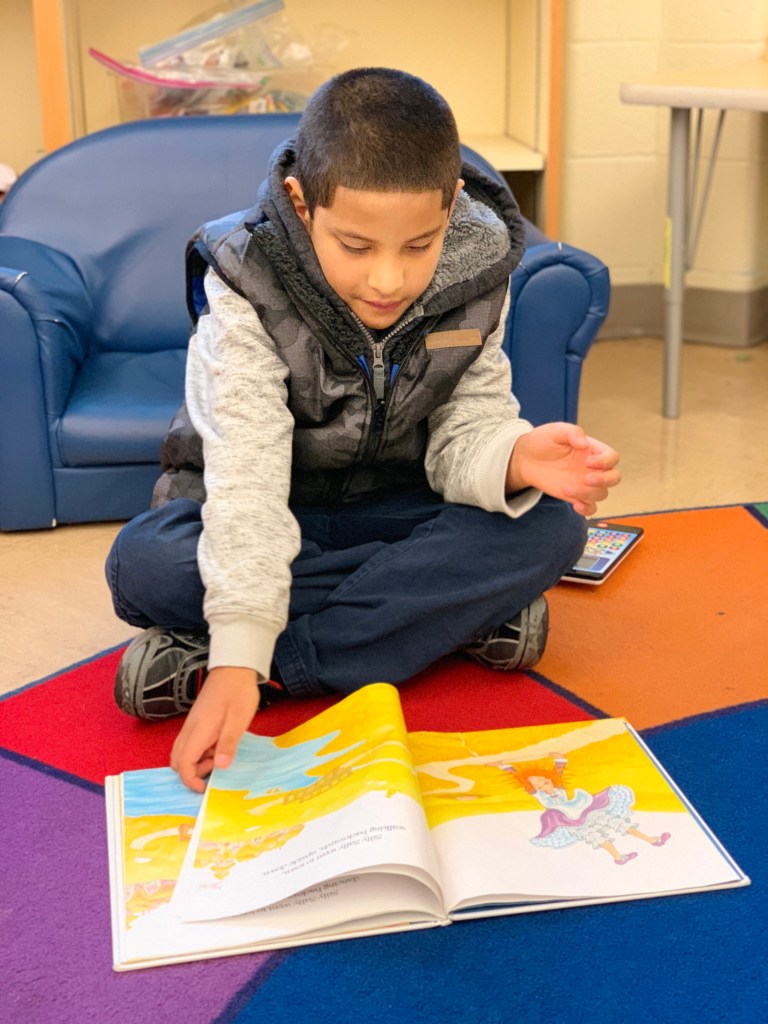
UD and UDL have similarities but also have differences. In the example of the stairs, people that are not able to independently walk up the steps can engage in reaching the top through the ramp. In UDL, successful planning implements the inclusion of diverse resources to support students with various abilities to engage, represent, and provide action & expression. See Adrian’s picture on this blog, Adrian started with board books as he developed motor skills to flip through the book without ripping the pages. Using the zone of proximal development (ZPD), upon his success to flip through the pages of the book independently, I supported him with hardcover books. Upon his achievement in the use of a hardcover books, then, he transition to paperback-books. The practice of various supports can support in engagement, as well as sensory friendly books that support in representation, and journals where students can be involved in action & express themselves. Books are important at any stage of life and can be supported in planning of UDL curriculum. The British educator, Sir Ken Robinson, said the key to education is to personalize it by building with the individual’s strengths and can naturally discover their passions (Meyer, Rose, & Gordon, 2014).
Some examples from the readings that I connected to my environment was reviewing chapter one in UDL Theory & Practice – that UDL reduces barriers, provides context and self-awareness, and support to engage, represent and provide action and expression to students. In addition, the YouTube video emphasize on students who are marginalized and underserved, such students include English Language Learners, disabilities, and gifted and talented. UDL provides the ability to plan for all of your students to meet them at their zone of proximal development and support them to reach their potential (National Center on Universal Design for Learning, 2010).
I’m excited for this semester, I’m ready to learn from the content and everyones input and experiences!
I’m a mom, my 9 year old son, Adrian, is full of joy, he loves to learn and be independent. He was diagnosed with autism at age 2, he uses a communication device to communicate , he enjoys books, and loves smiles.






Hi Chelsea, I was impressed too, I did not think other universities outside of the US participated in UDL. So…