“Each and every learner has unique strengths, skills, interests, desires, and readiness levels.”
RALABATE, 2016
Currently I teach preschool students and I have also taught Kindergarten in previous years. Our school is known for the diversity of our students. My class has a group of six ELL students that speak Spanish (3), Amharic (1), Arabic (1), and Mandarin/Chinese (1); I also have one student with an IEP that receives supports in Speech, Occupational, Adaptive PE, Vision & Hearing Support, and Specialized Instruction. In chapter 1 of Your UDL Lesson Planner, Patti Ralabate shares that now classes include more students with disabilities and they are not the same as they were in former years (Ralabate, 2016). This is true for our school, we have students that participate in inclusion that are in the Communication and Education Support (CES) classrooms, as well as students from Head Start that have an IEP.
To reach my diverse group of students, planning to support them I must include multiple means of support to lessons. Prior to this class, I did not have a full understanding of UDL, and did not think I was implementing it in my class. Now, having more knowledge and better understanding of UDL I can share there are many aspects of my teaching strategies that support the three guidelines of UDL that encompass multiple means of engagement, multiple means of representation, and multiple means of action & expression. “UDL is a framework to help remove barriers in the learning environment” (Ralabate, 2016, p. 4).
The current curriculum used district wide for preschool (PK3 & PK4) is Creative Curriculum (CC) by Teaching Strategies. It provides play-based experiences and implementation of language, counting, developing positive relationships, problem solving skills are provided (Teaching Strategies, n.d.) in the learning of five studies in the school year. Our preschool has studies in Trees, Recycling, Clothes, Balls, and Building. Lesson plans are not provided, but CC provides day by day guidance of your investigation. For example, my class’s study we are currently investigating is Clothes, CC books provide the following supports:
- Interest Areas – Toys or items to put in centers i.e. buttons, yarn, tape, measuring tools.
- Question of the Day – A question to engage students in the morning, typically upon arrival i.e. “How many buttons do you have on your clothes?”
- Large Group – Activities in large group, such as exploring different sized of clothes i.e. showing different clothes shorts, pants, long and short sleeve shirts.
- Read Aloud – Provides a book to read. That relates to the study such as “Corduroy,” “Goldilocks and the Three Bears,” “Button, Button, Who’s got the Button.” The books provide language and support in types of clothing, sizes, and what is on our clothes such as buttons.
- Small Group – Activities can include graphing our clothes that have zippers, buttons, snaps, Velcro, and laces.
- Mighty Minutes – Are 1-3 minute activities that support student involvement in hand movement or songs. (Teaching Strategies, n.d.)
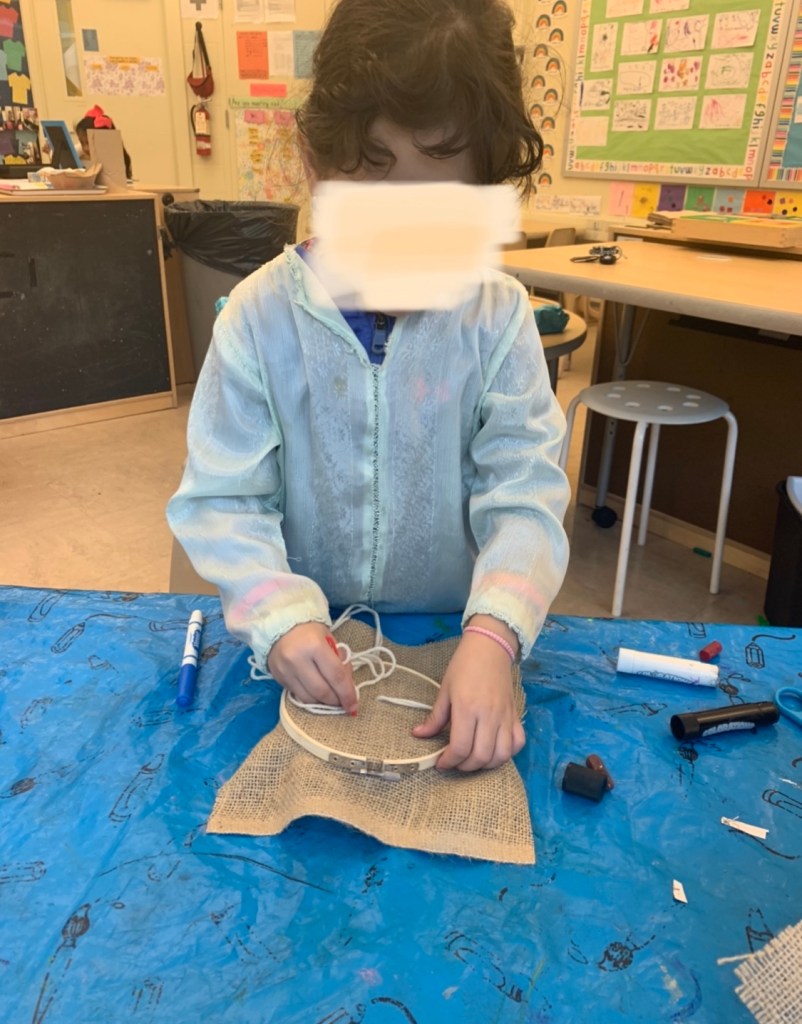
Chapter 1 had a reflective question that resonated with me — Questions 2: “What would you have to change in order to apply UDL to your lesson planning.”
This reflective question resonated with me because it helped me think of all my learners’ needs to provide “flexible approaches that can be customized and adjusted to scaffold and support learning” (Ralabate, 2016, p. 5) and learner variability in the way that they are “unique, strengths, skills, interests, desires, and readiness to learn” (Ralabate, 2016, p. 5). As UDL supports variability of all learners I started to think of the learning goals implemented in my curriculum and day to day lessons. One of the great things about Creative Curriculum is that it aligns with the GOLD Assessment used district wide for Progress Report and it’s developed by Teaching Strategies as well. This supports in lesson planning that aligns with the 38 assessment objectives in Social Emotional, Physical, Language, Cognitive, Literacy, Math, Sciences and Technology, Social Studies, The Arts, and English Language Acquisition (Teaching Strategies, n.d). To have CC align with the objectives enhances planning to be organic with learning objectives.
Chapter 2 blew me away, one of the reflections early on the chapter is “In what ways do you currently hold all learners to high expectation and still address their different strengths and challenges.” This is extremely difficult to reflect on, and I started to think, do I hold all learners to high expectations or do I make exceptions based on their readiness levels? As educators we may be guilty that our expectations vary depending on the student. For example, my expectation for a student that demonstrates strong vocabulary will be to express or show in detail the different types of clothes we wear. For a student learning English, my expectation changes as their vocabulary is limited and I expect them to express or show with minimal details on types of clothes. For a student with an attention span of 2-5 minutes, my expectation will also vary as the student might be interested in animals instead of clothes.
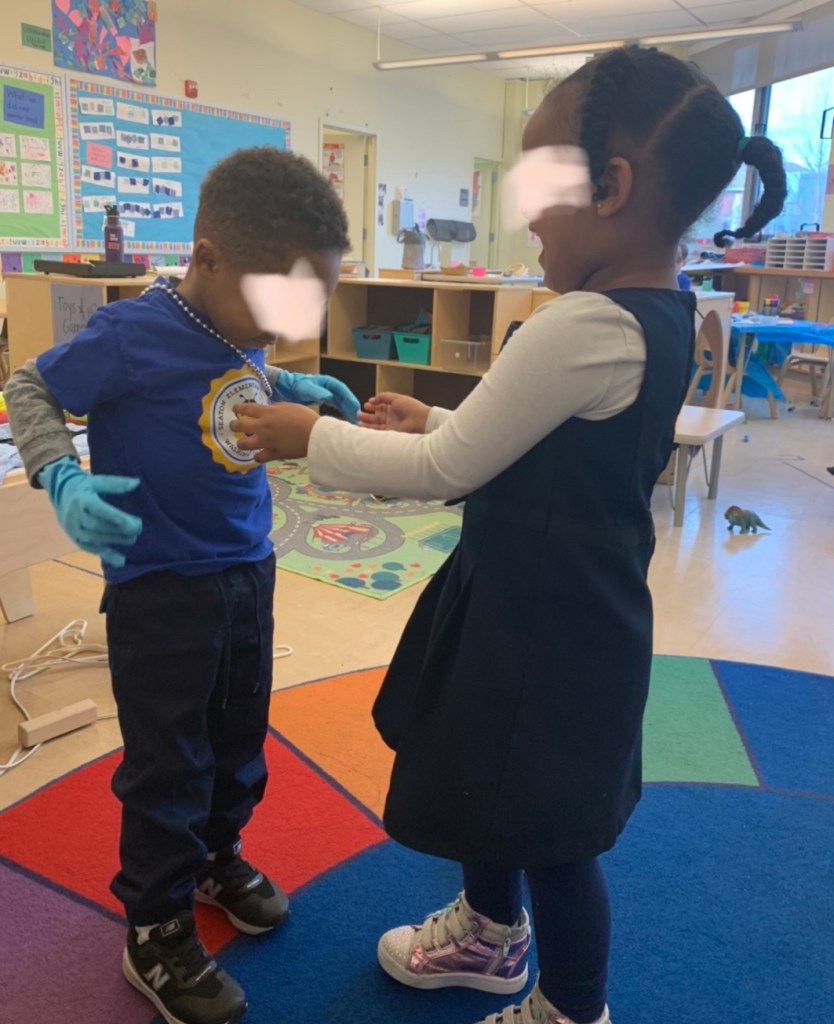
Nonetheless, I have expectations for my students, it is clear that I must have a clear purpose for the lesson, and not an activity. For example, it must be a clearly defined goal that leads the lesson and not an activity, that is, I should change the activity of expressing or showing what clothes my students know, but the purpose of the lesson is to differentiate clothes we wear in different seasons. This objective includes a flexible verb (differentiate) that allows students to engage and link their perceptions, show skills, and acquire new knowledge. I will be able to implement SMART learning goals in my planning to enhance my student’s learning. As UDL is based on neuroscience research, we cannot leave emotion out. In this week’s meeting, our guest speaker Allison Posey shared that emotions dominate perceptions, and emotions link to what we perceive as a learner. When a learning goal is too difficult our students emotion can make our students feel defeated. When the UDL guidelines are implemented we can plan for learner variability and set objectives that include variety to enhance learning.
References:
Ralabate, P. K. (2016). Your UDL Lesson Planner: The Step-by-Step Guide for Teaching All Learners.Paul H. Brookes Publishing Co.
Teaching Strategies. The Creative Curriculum for Preschool. Teaching Strategies. https://teachingstrategies.com/solutions/teach/preschool/
Teaching Strategies. The Creative Curriculum for Preschool: Investigation 1. Teaching Strategies. https://gold.teachingstrategies.com/national/assets/tg_clothes_26-37_spreads/TG_Clothes_26-37_Spreads_Page_1.html


Ivonne,
Thanks for the sharing the pictures of your classroom and your students. I believe that working with the age group you do, you get all of the raw emotions. Students that age don’t have all of the filters we aquire as grow. How much fun you must have every day!
I think that I would agree as a teacher my expectations of my students performance does vary. Often when I’m grading papers I purposefully flip all of the papers to the second page and begin grading there in order to prevent myself from knowing who’s paper I am grading. Sometimes when I turn to the front page, I’m surprised to find the students grade! Yet, it is important as you state to have high expectations for all students, based on their level. Challenging to do so if UDL isn’t implemented because the results all includes a one size fits all instruction and adapted assessments that fit what we expect the students to be able to complete. I like the way you make me think…
Thanks
Jeannine
LikeLike
Jeannine,
Thank you for your kind response. Yes they can be a thrill to work with, but also need constant support, scaffolding, and strategies, its definitely hard to be a 3/4 year old!
That is such a great idea to do, to flip so you do not see the name. I will start doing that with my students work in hopes that my expectations remain high for all of my students. I really loved the reflective questions, because its not telling me to start over on my planning, instead to look into areas where there needs to be more support for students.
LikeLike
Ivonne — what a thoughtful and well “discussed” reflection. I love the way you let us walk through your “thinking aloud” process as you consider the readings. Your mention of some of the reflection questions in the readings confirmed how connected you were to these important discussions and your takeaways were amazing. I like Jeannine’s comments above and it also reminds me of when I worked in practice as a vocational evaluator. Usually, most of the high school students with disabilities that I worked with came with a thick file of test results. I purposely avoided reading very deeply into those until I had a chance to meet the student and get some first impressions. I also wanted to explore my own toolbox of resources (many hands-on career exploration work samples) to watch their approach. Our assessment process, by nature, was designed to offer multiple representations of information, multiple ways they could demonstrate what they were learning, and multiple ways to hook/ engage them in the assessment process. We often began with “what are your interests”? I think your dissection of the importance of writing with flexible language is so key. Clearly that Creative Curriculum is a model tool!
LikeLiked by 1 person
Hi Professor Smith,
By far the second chapter was my favorite because it made me reflect on my students and my expectations for them. Today, when I saw their work, I did as Jeannine and you do (not look at the names), and I was stunned because I could not tell who’s work it was. I’d have to analyze every aspect of their work to make an educated guess of who’s work it belong to. The flexible verb will also open doors to student flexibility. Again a very informative chapter, and by my favorite, although we’re at the beginning of the semester!
LikeLike
Hello Ivonne,
It’s so nice you get to work with little youngsters. I have yet to start my educational career. My mother-in-law has a home daycare center that I help with and all the children are your preschooler’s age. It is a joy. After studying a little part of UDL I too now am excited to go to the classrooms and implement what I learned. Do you feel like there was a treasure (the UDL framework) there and you wish you would’ve found it earlier? I do.
LikeLike
Hi Summer,
It can be total fun with the kids sometimes. I’ve heard some funny and silly things like “Ms. Luna, the moon keeps following me,” and I get to to how their growth over the years. Amazing how they are so little and might not remember as they are older, but I know I’m providing my students with language and learning methods that ignite their love and curiosity for learning! I also have some pretty rough days, like today, one of the students was extremely tired and clung to me the entire day, very little was accomplished today; I did get the chance to enhance language skills to express sadness and when we need cuddles or hugs. To answer your question, YESSS! I love UDL and the variability to include all learners, and not because of a disability or language acquisition, but because of the neuroscience behind it and the support for learners in various ways. I cannot wait to get to the rest of the chapters! I think it should be provided, many times I have seen teachers and paras give two choices that children aren’t fond off, and it triggers their anxiety or they do feel the work is hard and I’ve heard teachers say “I don’t understand why you don’t know.” In reality is damaging to children learning-self-steem because teachers do not seem to observe the students unique learning abilities and styles.
LikeLike