“A fair education system does not see all students as identical, and to meet the challenge of learner variability, the school community must share a belief in equity and high expectations for all learners.”
Berquist, 2017, pp. 59
Q1.
I found it reassuring and as a well thoughtout systems change on the time frame that can take anywhere from 3 to 5 years. This ensures that system changes are not rushed and that the process can be valuable in the learning process for all stakeholders. Interestingly, I also found the staff at Dr. Croasdaile’s school were able to have various roles to support school staff and students. While the information felt overwhelming, understanding the process and the time that can take to build realistic goal can lead to successful system change in each phase of the process. It also helped to see that prior to systems change throughout the school, they started a pilot with 6th grade PLC/ELA to help build collaborations and start the process within the school.
The learning targets and statements “I am learning to…” where very helpful to reduce barriers and build learner expertise. The learning targets of learned helplessness, are 1. What Im being asked to do, 2. What my options are for doing it, 3. How to appropriately find information (Croasdaile & Hines, 2020). I found them helpful because it helps to have comprehension of the school’s vision and the relationship to your goals with the use of needed tools, strategies and resources.
Q2.
The strategies I retrieved from this week’s readings are based on Elizabeth Berquist “UDL Implementation in Schools: UDL Moving Exploration to Integration” from Section 2: UDL Implementation in Schools. It continues with establishing a school culture that values 21st century professional learning. They provide a lot of examples from the Halstead Academy, a Title 1 school with the lowest achieving elementary school in their area. The section is focused to building a school culture, and to do so, it’s important to have a shared vision, positive culture, and high expectations through various processes to implement and create a school culture.
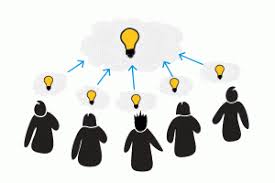
A shared vision values professional learning and embraces the framework of Universal Design of Learning (UDL). It also makes it crucial for school leadership team to ensure all staff members begin to notice that traditional design of education cannot meet the needs of all learners. This includes students “within the margins” and learner variability. Importantly, effective collaboration is an essential factor to build a community that values professional learning. It is important to emphasized it is needed to understand and be respectful of the social environment of students that the school serves. To create a shared vision, a strong foundation needs to be built through the schools teachers, because they must agree on large issues. To help understand this, Berquist shared guiding questions from Halstead Academy “Why do we exist?”, “What must our school become to accomplish our purpose?”, “How must we behave to achieve our vision?”, “How will we embark the process?” (Berquist, 2017, pp. 59). The guiding questions can support to build a mission and vision for the school and enhance school culture.
Creating a positive culture in a school setting is more than staff getting along. In Berquist reading, it is shared that a positive school culture is created “when school staff understands the environment students come from and the challenges they encounter, they can create a teaching and learning culture that meets students where they are” (Berquist, 2017, pp. 60-61). As educators and professionals, when we understand the environment our students come from are better prepared to provide individualized supports and plan for student variability.
“We cannot fix the challenges our students bring to us, but we can fix the way we approach those challenges to ensure that all students learn.” -Novak
Bertquis, 2017, pp. 61
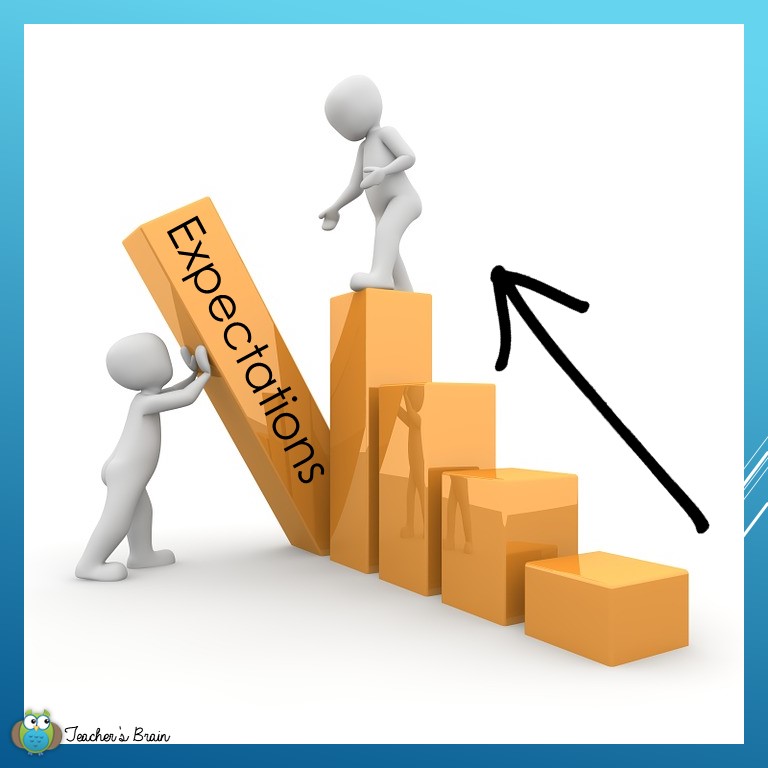
The last must have to build a school culture are high expectations. After the schools create a vision and establish positive culture, high expectations must be the norm for the entire school community. High expectations fail when it relies on faculty, staff, students, and parents for school administration to set expectations and hold everyone accountable to meet them (Berquist, 2017). It’s when all stakeholders hold one another accountable to meet high expectations, then the school belongs to all and high expectations are met.
To build a school culture with a shared vision, positive culture and high expectations, there must be an established culture that values professional learning. This helps educators shift from planning to implementation, the administrative team works to find structures that permits teachers to see effective instruction in practice known as instructional rounds. Instructional rounds are inspired by ideas, awareness, rigor and relevance, improving instructional practices and building competencies, and reflective practices. This means, that teachers must experience one another’s teaching methods and strategies through various supports. This allows for the instructional process to evolve over time, in Halstead Academy, teachers started to identify focus areas, attributes of a 21st century classroom that focuses on collaboration, creativity, communication, and critical thinking in their instructional rounds. The instructional rounds are not methods of evaluation, judgement, and critiques. Within the professional learning, educators begin to develop distinctive and common language through the value of resources and enhance strong professional relationships.
You might be asking yourself, how does a school have professional learning to enhance school culture? This happens over time through rigorous whole group and small group supports for professional learning. Whole group are through the use of online resources with UDL applications, multiple means of representation. In Halstead Academy, this was provided through online resources to be accessible at the teachers time. Ensuring the application of UDL through multiple means of representation, action and expression for learning teachers allows the delivery of instruction to meet the needs of educators. Small group allows for grade level meetings that allows for problem seeking solutions, data analysis, professional development, application and responsive planning. Sessions promote community and collaboration among team members allows mastery feedback from administration that are relative to the school’s goals.
Furthermore, there is vast supports for individualized professional development. This gives teachers to acquire resources from other teachers and administration. Then, teachers identify their own goal, develop a plan to meet the goal and identify how this goal will impact the student achievement. This can be supported through various forms of professional development:
Book Study – Teachers are grouped by common goals, and facilitate a stud book. The literature aligns to desired professional outcome. The experience culminates in a book review the group writes and presents to the rest of the faculty.
Coaching Sessions – Coach provides support by modeling, co-teaching, coaching, and providing feedback through the lens of the teachers goal.
Presentation – Share ideas/information this allows to experience of presenting to share their next practices with peers during whole group.
Article or Tutorial – Share new ideas as they pertain to their desired goal can do it in a form of an article or web tutorial, with the use of screencast tools.
Learning Walk – Teachers observe several classes looking for trends, effective practices, and student engagement. This peaks in a reflective, non evaluative conversation with the instructional coach.
Lesson Study – Form groups based on similar goals or across grade levels. Together they plan lessons with the use of best practices. One member implements while the rest of the group observes. Then, teachers reflect on the lesson using formative assessments and observation tools connected to their goals. The process repeats by implementing changes they deemed needed to improve lesson.
Peer Observation – Observe a peer in their strength area one wishes to improve. Such as teachers working to identify best practices for inclusive classrooms.
Conference/Workshop/Webinar/Online Course – Allows for teachers to engage in materials aligned with their own goal, on their own time, & reflect on or share new learnings with others
“We cannot prevent all of the challenges students will face, but we can alleviate them by designing a learning that leaves no room for failure…[T]o do this, we need to be surrounded by people who have the same belief.” -Novak
Berquist, 2017, pp. 61
Reference:
Berquist E., & Grasmick, N. S. (2017). UDL: Moving from Exploration to Integration. CAST Professional Publishing. ProQuest Ebook Central, http://ebookcentral.proquest.com/lib/gwu/detail.action?docID=4941957
Clip Art Key. (n.d.). Professional Clip Art, Transparent Cartoon [Online image]. Clip Art Key. https://www.clipartkey.com/view/wmJhim_professional-development-clip-art-transparent-cartoons/
Croasdaile, S. and Hines, G. (2020). UDL Guest [Video File]. Zoom https://zoom.us/rec/share/yv1RCI-syz9JHNbvyVDnYLYxRNTMT6a8hiIY-fEKyx7QBclzqKwOqpV0d36u8ZQY?startTime=1586898290000
McIntyre, K. (2019). What’s the Difference Between Teamwork and Collaboration [Online image]. Edmentum. https://blog.edmentum.com/blog/kristymcintyre
Norman, F. (n.d.). Building a Shared Vision in a Virtual Team [Online image]. Ulfire Australia. https://ulfire.com.au/building-shared-vision-virtual-team/
Teacher’s Brain. (2018). Setting High Expectations for Students [Online image]. WordPress. https://teachersbrain.com/setting-high-expectations-for-students/


Wow, this was excellent and super informative. Thank you for your stellar work.
LikeLike
Thank you!
LikeLike